
Discover Meaty Vegan Bolognese
This hearty vegan Bolognese sauce stands out by incorporating texturized vegetable protein (TVP) instead of more common options like lentils or mushrooms. This choice delivers a remarkably authentic texture along with a substantial increase in plant-based protein content. The recipe also features finely chopped onion, carrot, celery, strained tomatoes, and a subtle addition of cashew cream for richness. Unlike many tomato-heavy versions, this sauce maintains a balanced flavor profile that is not overly acidic, allowing the natural taste of the vegetables to truly shine through.
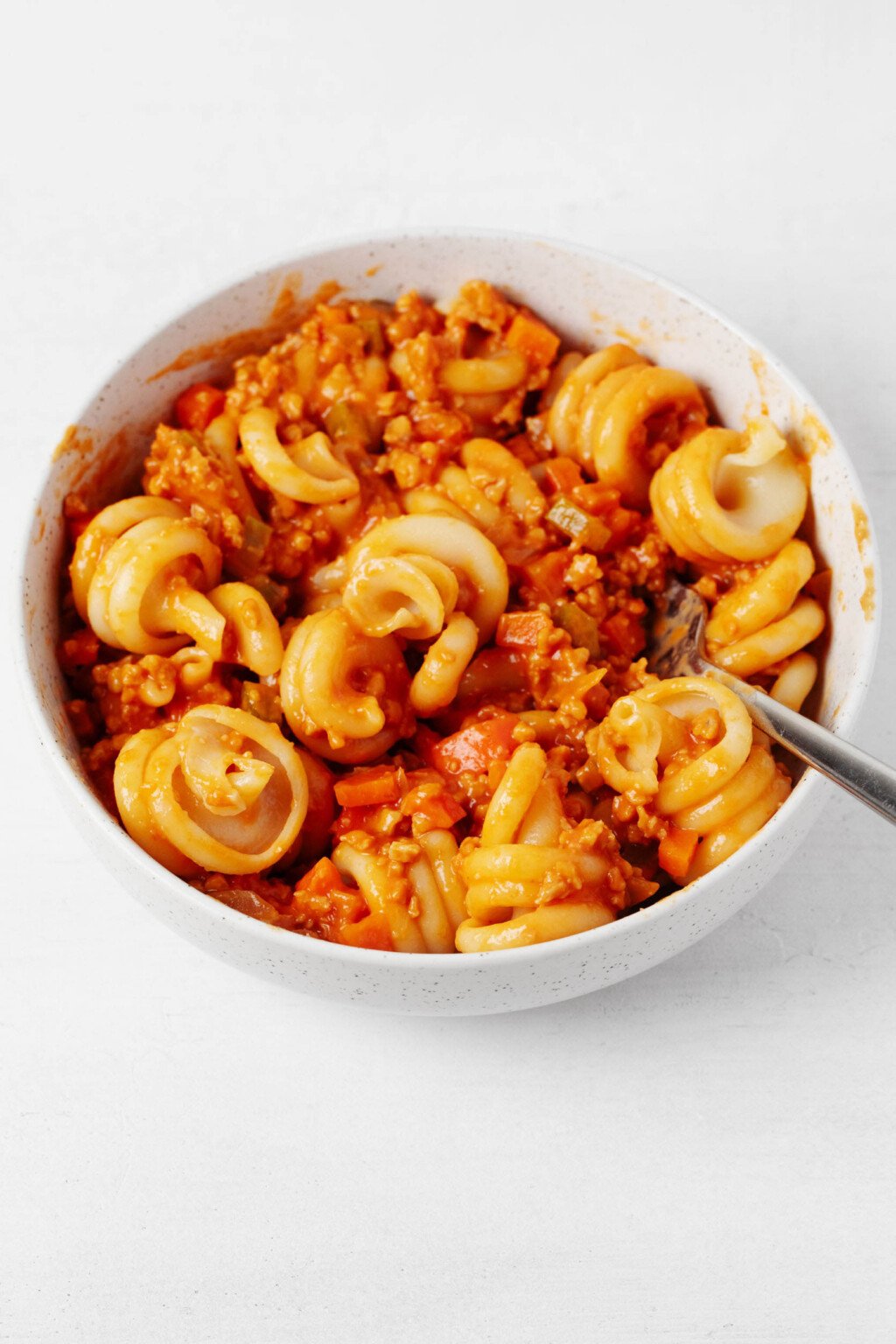
As someone passionate about pasta and committed to a plant-based diet for many years, I’ve tried numerous variations of vegan Bolognese sauces over time.
Among all those experiments, this TVP-based vegan Bolognese has become my absolute top choice. It offers a satisfying heartiness, is budget-friendly to prepare, and bursts with incredible flavor.
The standout quality of this sauce lies in its genuinely meat-like texture, reminiscent of the classic version, while also being packed with protein.
These impressive attributes come directly from the inclusion of TVP, or texturized vegetable protein, which is derived from soybeans. This ingredient is highly versatile, cost-effective, and provides excellent nutritional value.
Once you incorporate TVP into your cooking routine, you’ll discover its suitability for a wide range of dishes, including plant-based tacos, stir-fries, chilis, and beyond.
However, it pairs exceptionally well with vegan Bolognese, a timeless comfort food staple.
A More Authentic Take on Bolognese
Whenever I develop a new recipe, I often realize there’s more to learn about the dish than I initially assumed. Bolognese serves as a prime illustration of this.
I used to picture Bolognese as a dense tomato sauce loaded with meat. While I knew there might be a distinction from ragù or Italian-American meat sauce, the specifics eluded me.
Indeed, Bolognese qualifies as a meat sauce that frequently includes tomatoes.
One key misunderstanding was assuming it should be as prominently tomato-flavored as an Italian-American meat sauce.
Traditional Bolognese is not simply marinara with added ground meat; rather, it’s the opposite in emphasis. Certain authentic recipes use just a few tablespoons of tomato paste.
I was delighted to discover that Bolognese traditionally incorporates milk or cream for a velvety finish.
I’m particularly fond of creamy pasta dishes, and this Bolognese fits right into that beloved category.
Understanding Bolognese vs. Ragù
What sets Bolognese apart from ragù? In truth, there is no separation—Bolognese is simply a specific variety of ragù.
Ragù refers to a meat-based sauce with diverse regional styles and protein choices.
Ragù alla Bolognese hails from the Bologna region, featuring a base of sautéed carrot, onion, and celery, followed by meat. Tomatoes may be added optionally, and dairy is typically introduced near the end of cooking.
This vegan adaptation skips the meat entirely, diverging from tradition, but I’ve aimed to capture greater authenticity compared to previous attempts.
The vegetables play a starring role here, complemented by all-purpose vegan cashew cream for a gentle creaminess.
Without any beef, it relies on a plant-derived protein celebrated for its convincingly meaty chew.
Embracing TVP in Plant-Based Cooking
TVP falls into what I call “classic” vegan pantry staples, alongside items like seitan, soy curls, Tofurky, and nutritional yeast.
Far from outdated, these ingredients remain readily available and incredibly practical today.
They predate the era of advanced vegan meats and cheeses now lining store shelves. Longtime vegans may recall relying on them before such options proliferated.
Produced from soybeans through roasting, grinding into flour, defatting, and extruding, TVP offers a dry, crumbly appearance similar to bulgur before preparation.
Rehydrated in hot water or broth, it transforms into something akin to ground meat in consistency.
While not deceptive enough to trick a dedicated meat eater—like some modern alternatives—rehydrated TVP provides a delightful, chewy, distinctly meaty bite.
Many vegan Bolognese recipes opt for lentils, which are wonderful but don’t quite mimic meatiness for me.
Even among seasoned plant-based cooks who avoid hyper-realistic meat substitutes, I still appreciate those textures. Mushrooms help sometimes, but not always sufficiently.
This recipe brings you nearer to an authentic meat sauce experience at home, all without the expense of commercial vegan meats.
Nutritional Benefits of TVP
Beyond its affordability, adaptability, and appealing texture, TVP delivers significant nutritional perks.
A quarter cup of dry TVP, expanding to about half a cup when rehydrated, supplies roughly 10-12 grams of protein—surpassing a half cup of beans and matching a four-ounce tofu serving.
This amount also contributes 10% of your daily iron needs and 15% of potassium requirements.
For fat-conscious eaters, TVP starts virtually fat-free, allowing full control over added fats through seasonings.
Likewise, it contains negligible sodium naturally, unlike many pre-seasoned vegan meats, empowering you to customize flavors precisely.
Step-by-Step Guide to Vegan Bolognese with TVP
Step 1: Reconstitute the TVP
Start by rehydrating the TVP: place the dry granules in a bowl and cover with two cups of boiling water for every one cup of TVP. Let it soak for 10 minutes.
For efficiency, hot water works best, though room-temperature soaking takes longer but yields similar results.
Drain through a fine-mesh strainer, gently pressing to expel excess liquid, then set aside.
At this stage, the TVP is primed for seasoning and cooking.
Step 2: Sauté the Vegetables
In a large, deep skillet, warm olive oil over medium heat. Add diced onion, carrot, and celery—the essential sofrito base providing texture, depth, and nutrients.
Sauté for 6-7 minutes until softened and the onion turns translucent. Deglaze with white wine (or vegetable broth alternative), cooking until mostly evaporated, about 3-4 minutes.
Incorporate tomato paste and Bragg Liquid Aminos or tamari to infuse umami richness.
Step 3: Incorporate the TVP
Add the prepared TVP to the skillet, dusting with nutritional yeast for extra savoriness and protein.
Stir thoroughly to blend flavors.
Step 4: Add Tomatoes and Cashew Cream
Introduce 1.5 cups of strained tomatoes (passata), opting for this over diced for a smoother, lighter consistency. Crushed or diced work if needed.
Simmer on low for 3-5 minutes until thickened and bubbling. Fold in 3/4 cup cashew cream, simmering briefly more for creaminess.
This measured tomato quantity and cream balance acidity, making it gentler than bolder tomato sauces.
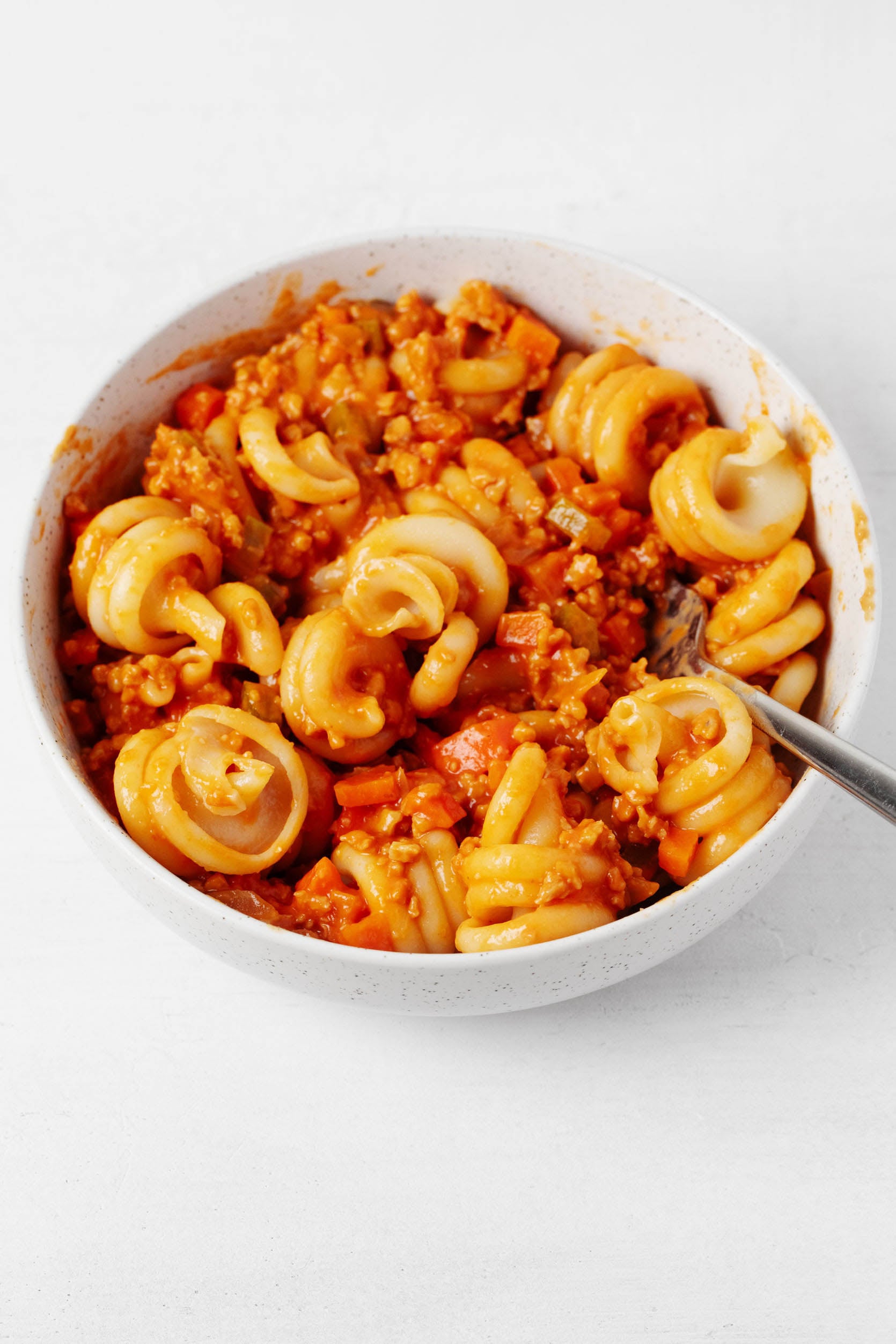
The result is a vibrant orange-pink, textured sauce—perhaps thicker than classic versions, but perfectly flavorful.
Step 5: Cook Pasta and Serve
Boil your preferred pasta in salted water to desired doneness. Drain and portion into bowls, generously topping with the Bolognese sauce.
Meal Prep and Storage Tips
Prepare the sauce ahead for immediate serving with freshly boiled pasta, or store for later.
It keeps in an airtight container in the refrigerator for up to 4 days or freezes for up to 6 weeks—ideal in small portions for easy thawing.
Prep Time: 15 minutes
Cook Time: 40 minutes
Total Time: 55 minutes
Yields: 4 servings
Ingredients
- 2 cups water (480 ml)
- 1 cup TVP (95 g)
- 2 tablespoons olive oil
- 1 small yellow onion, finely diced
- 2 carrots, trimmed, peeled, and finely diced
- 2 stalks celery, finely diced
- 1/2 cup dry white wine (120 ml)
- 2 tablespoons tomato paste (60 g)
- 1 1/2 tablespoons Bragg Liquid Aminos or tamari
- 1 tablespoon nutritional yeast
- 1 1/2 cups strained tomatoes (passata) or crushed tomatoes (355 ml; one 14-ounce / 390g can or carton)
- 3/4 cup cashew cream (180 ml)
- Freshly ground black pepper
- 8-12 ounces dry pasta of choice
- salt
Instructions
- Bring the two cups of water to a boil in the microwave or in a saucepan. Pour the boiling water over the TVP. Allow the TVP to soak for 10 minutes. Drain the TVP through a fine strainer. While it’s straining, use the bottom of a measuring cup to press down on the TVP, helping to remove as much moisture as possible. Set the TVP aside.
- Heat the olive oil over medium heat in a large, deep skillet till glistening. Add the onion, carrot, and celery. Cook the vegetables, stirring often, for 6-7 minutes, or until the onion is translucent and all of the vegetables are tender. Add the white wine to the vegetables and cook, stirring occasionally, for 3-4 minutes, or until the wine has nearly all cooked down. Add the tomato paste and Bragg Liquid Aminos or tamari to the skillet. Stir everything well, fully incorporating the tomato paste into the warm mixture.
- Add the reconstituted TVP to the skillet, then sprinkle the nutritional yeast over it. Give the ingredients a good stir to incorporate well. Add the strained tomatoes to the skillet. Turn the heat to low and simmer the sauce for 3-5 minutes, or until it’s bubbly and thick. Stir the cashew cream into the bolognese and simmer for another 2 minutes, or until it’s hot, fragrant, and lightly creamy. If the sauce is overly thick for your liking, you can add a splash of water at this point. Taste the bolognese and add freshly ground black pepper to taste; you can also add a little extra Bragg liquid aminos or tamari, as needed.
- Bring a pot of salted water to a boil. Add the pasta and cook to your preferred texture, or according to package instructions. Drain the pasta, then serve it with the bolognese. The bolognese will be enough for 4-6 portions, depending on how saucy you like your pasta to be! Enjoy.